Skip to content
One of the most common questions small business owners ask is, “How much does a website cost?” In 2026, the answer depends far less on appearance and far more on performance, ownership, and how well the site supports your business systems. A website is no longer just a digital brochure—it’s a foundational tool that should actively support growth.
Unfortunately, many businesses are still drawn to low-cost websites that promise quick results but fail to deliver meaningful outcomes.
Why Cheap Websites Fail
Low-cost websites often look acceptable on the surface, but behind the scenes they lack the structure needed to support a growing business. They are typically built without long-term strategy, scalability, or performance in mind. Over time, these shortcomings show up as slow load times, poor search visibility, and a lack of meaningful leads.
Cheap websites commonly fail because they:
- Lack strategic planning and conversion-focused design
- Use slow or unreliable hosting
- Offer limited customization and flexibility
- Don’t integrate with marketing, sales, or operational systems

What seems like a savings upfront often results in lost revenue, expensive fixes, or a full rebuild later.
Ownership Matters More Than Most Businesses Realize
Many do-it-yourself website builders market convenience, but they often come with a hidden cost: limited ownership. When you rely on proprietary platforms, you may not fully control your website, its data, or its future. Migrating away from these systems can be costly or even impossible.

True website ownership gives you control over your content and its design, performance, and integrations. It ensures your website can evolve as your business grows, rather than holding you back when you need flexibility the most.
A Website Alone Doesn’t Generate Leads
Another common misconception is that simply having a website will generate leads. In reality, a website is only effective when it’s connected to a larger strategy. Traffic without follow-up, automation, or system integration rarely converts into real business.
That’s why working with a systems partner—not just a designer—matters. A strategic partner builds your website to connect seamlessly with your CRM, email and SMS follow-ups, advertising platforms, and internal workflows. The result is a site that doesn’t just look good, but actively supports sales and operations.
Consolidation Saves Money Over Time

Many small businesses unknowingly overspend by using multiple disconnected tools for marketing, lead management, scheduling, and reporting. When systems don’t communicate, inefficiencies pile up and manual work increases.
A properly built website can act as the central hub that ties everything together. By reducing software costs and streamlining workflows it will improve visibility across your business. While consolidation may require a higher upfront investment, it often leads to significant long-term savings.
What a High-Performance Website Costs in 2026
A professionally built, high-performance small business website typically falls within these ranges:
- Design & build: $2,000–$15,000+ depending on complexity, customization, and integrations
- Monthly costs: $225–$1,200 based on hosting quality, traffic, security, backups, and ongoing support
These ranges reflect websites designed for speed, reliability, and growth—not shortcuts.
Don’t Go Cheap on Hosting or Development
Hosting and development are two areas where cutting corners almost always leads to problems. Poor hosting can cause slow load times with downtime and security vulnerabilities. Weak development results in fragile sites that struggle under increased traffic or new features.
In most cases, businesses don’t feel these issues immediately—but they surface as soon as growth begins. Investing properly from the start prevents costly setbacks later.
The Pathfinder Creative Approach
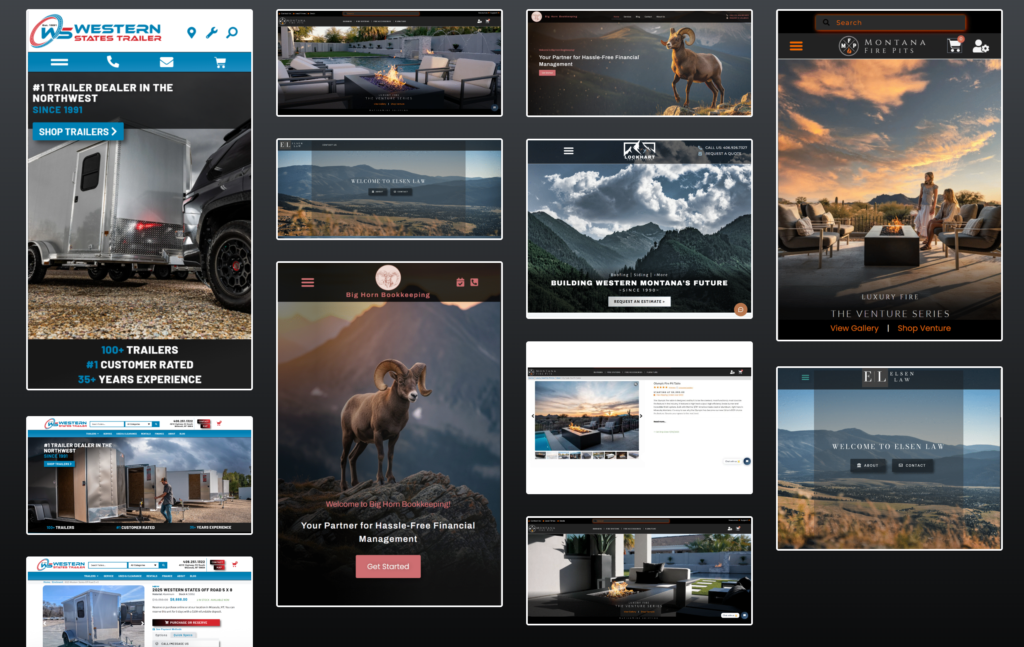
At Pathfinder Creative, we build websites with performance and longevity in mind. Our websites utilize high-performance edge caching, daily backups, and next-generation image optimization to ensure speed and visual impact. More importantly, we design sites that integrate seamlessly with your systems, helping your website function as a true business asset rather than a standalone tool.
Final Thoughts
In 2026, the true cost of a website isn’t measured by the initial price tag—it’s measured by how well it supports your business. A well-built website pays for itself. It actively supports growth through performance, conversions, and scalable systems. When done right, your website becomes a foundation for long-term success—not an expense you regret.